Tree Trimming & Pruning · St. Louis, MO
Tree Trimming & Pruning in St. Louis, MO
Limbs over the roof, branches rubbing the service line or a crown so thick that the yard never sees sun are all reasons St. Louis owners call about trimming. We connect you with an independent tree service that can do it.
We operate this website and pass your request to an independent tree service covering your neighborhood. The contractor calls you back, asks what you want trimmed and why, and quotes the work. You decide whether to go ahead, and there is no cost to ask.
Call (314) 816-2884St Louis City Tree Removal operates this website and connects local customers with independent local tree services. We don't do the work ourselves and we don't check any tree service's qualifications, so confirming that is up to you before you hire.
Request sent
A local contractor will reach out shortly. Watch for a call from an unknown number.
Quick answer
What Good Pruning Looks Like
Good pruning removes specific branches for a reason: dead wood that could fall, limbs rubbing a roof, branches crossing each other, or growth blocking a walkway or alley. It does not mean cutting the whole tree back to stubs. Topping, where every large limb is cut off at the same height, leaves the tree with weak regrowth and decay, and it is one of the most common mistakes in residential tree work.
Before the contractor arrives, decide what you want. Do you need the roof clear by a few feet? Light for a garden? Clearance for a garage door or delivery truck in the alley? A clear goal lets the tree service quote the right amount of work and keeps the crew from taking more than you wanted.
If any branch is near an electric line, including the line from the alley pole to your house, leave it alone and mention it on the call. Ameren Missouri advises never cutting or trimming trees near electric lines yourself.
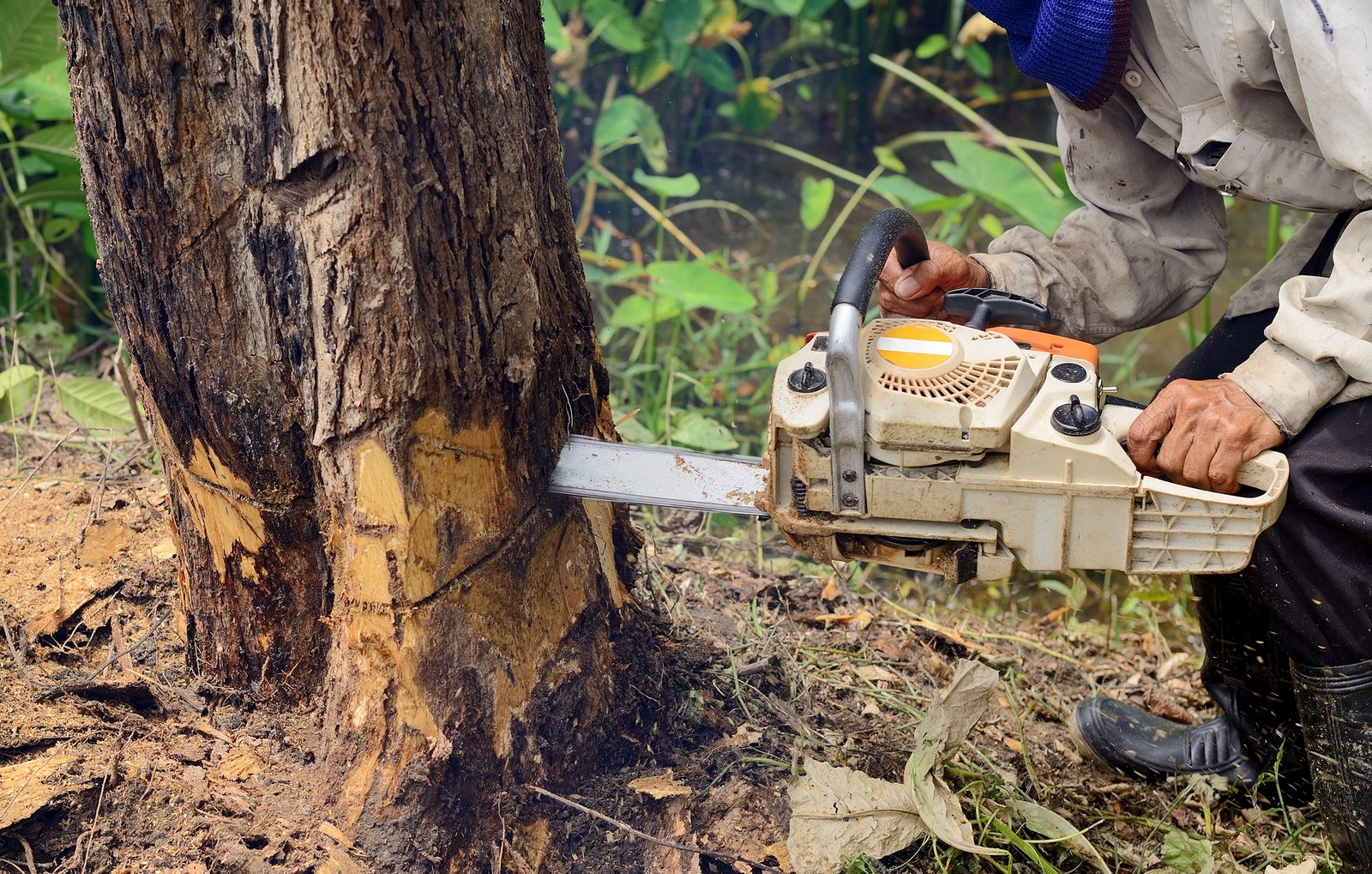
Types of trimming
Deadwooding, Thinning and Raising the Crown
Deadwooding means taking out dead branches throughout the crown. In older city trees this is often the most useful single job, since dead limbs are what usually come down first in a thunderstorm. St. Louis averages 48 thunderstorm days a year, so clearing deadwood before spring is a common request.
Crown thinning removes selected live branches to let light and wind through the canopy. Crown raising lifts the lowest limbs so people, cars and trucks can pass underneath, which matters along alleys and over driveways. Reduction shortens specific limbs back to a healthy side branch, for example to pull a branch back from a roof or chimney.
Most jobs mix these. A crew might deadwood a maple, raise it over the alley and reduce two limbs off the house. Ask the tree service to describe in plain words which branches it plans to cut and roughly how much of the canopy will come out.
Timing
When to Trim Trees in St. Louis
Dead and broken branches can come out any time of year, and storm damage should be handled as soon as it is safe. For routine pruning, many arborists prefer the dormant season in late fall and winter, when the leaves are down, the structure of the tree is easy to see and the crew is less likely to be rushed.
Winters here are mild enough for work on most days. The average January temperature is about 32 degrees, and the city gets roughly 16.6 inches of snow in a typical year. Summers are hot, with average July highs near 90 degrees, and heavy pruning in a long dry stretch adds stress to a tree that is already short on water.
Some species have specific timing advice, especially oaks. Ask the tree service whether it recommends a particular season for your tree and why.
Tree services also tend to have more open dates in the colder months, outside of storm cleanup, which can make it easier to get the crew you want.
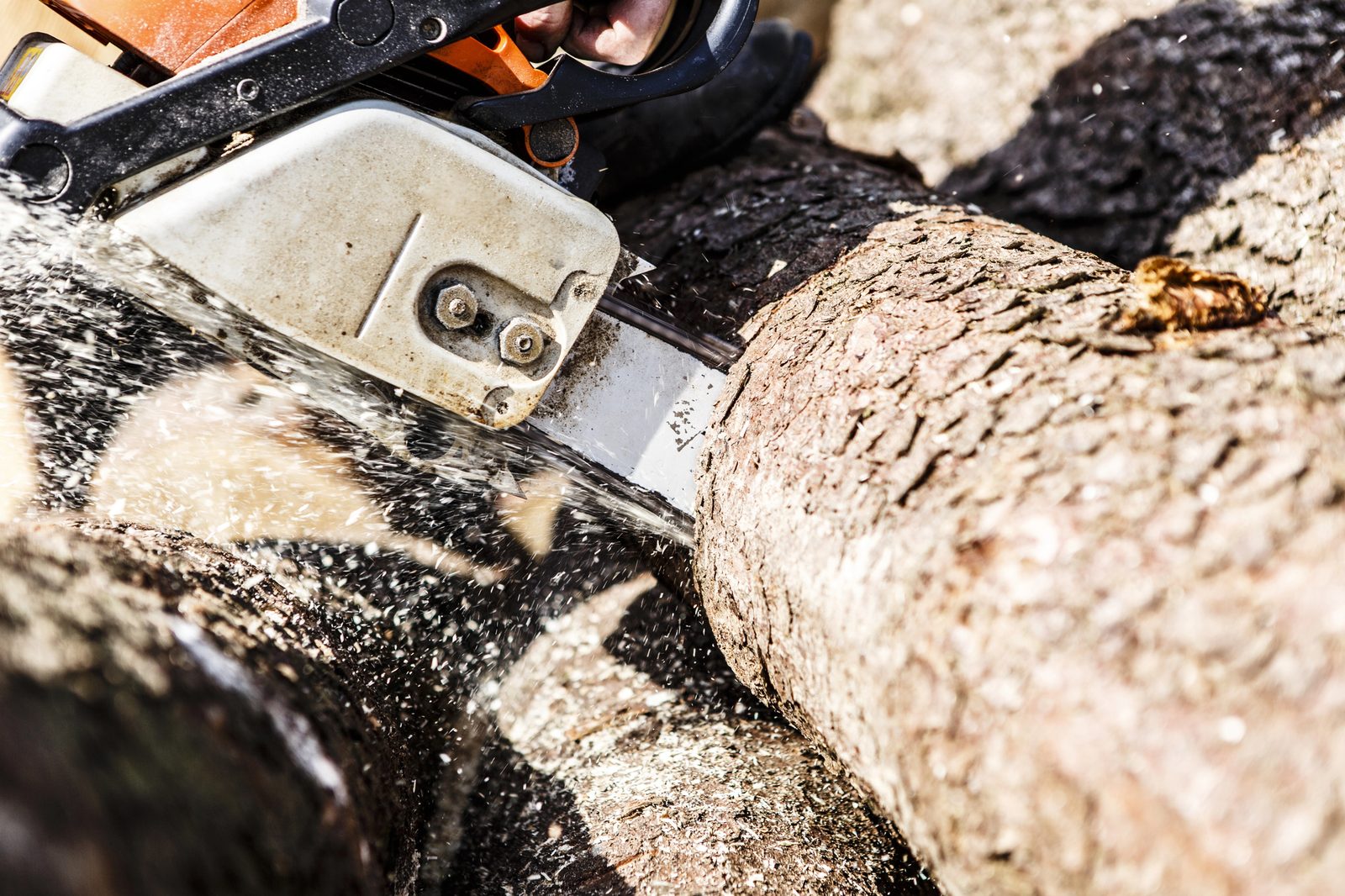
Watch
See Tree Trimming in Action
A short clip of a climber pruning limbs back to proper cut points.
Common jobs
Trimming Requests in City Neighborhoods
These are the kinds of trimming jobs that come up again and again on St. Louis blocks.
Roof and chimney clearance
Limbs resting on a slate or shingle roof wear it down and give squirrels a bridge. Reducing those limbs back to a side branch keeps the roof clear.
Alley clearance
Low limbs over the alley can catch trash trucks and box trucks. Raising the crown over the alley is a frequent request from owners on blocks with rear garages.
Deadwood in old oaks
Large oaks carry a lot of dead wood as they age. Taking it out reduces the chance of a heavy limb landing on a car or a porch.
Gardens and solar panels
Thinning the crown lets light reach a vegetable bed or a panel array without removing the tree.
Sidewalk and street side
Trees in the strip between curb and sidewalk are city trees. Private trimming there needs a Tree Permit to Maintain.
Service line contact
Branches touching the line to your house are the owner's responsibility, according to Ameren. Ask how the crew will handle it safely.
City angle
Trimming Around City Street Trees
If the tree you want trimmed stands between the curb and the sidewalk, or typically within 10 feet of the curb, it belongs to the City and the Forestry Division manages it. The City's Tree Section prunes street and park trees, and you can request service through the Citizens Service Bureau at 314-622-4800.
If you would rather hire your own contractor to prune a city tree, you or the contractor need a Tree Permit to Maintain. The City's permit page says commercial tree services must have at least one ISA Certified Arborist on staff and a City of St. Louis business license, and that an urban forester typically inspects within 5 to 7 business days. Pruning permits carry no fee.
If branches from a city tree hang over your yard, the safest route is to ask the Forestry Division at (314) 613-7200 before anyone cuts. A permit is also a record that the work was approved if a question comes up later.
How it works
How to Get a Trimming Quote
Describe the trees
Call (314) 816-2884 or use the form. Tell us how many trees, roughly how tall, and what you want trimmed away from.
We send it on
Your request goes to an independent tree service that works your part of St. Louis or the nearby county.
Walk the yard together
The contractor calls to arrange a visit, then points out which limbs it would cut and gives you a price.
Decide on the scope
You can approve all of it, part of it or none. There is no cost for the request.
If you want the wood chipped and left for mulch, mention it early, since it can lower the hauling cost.
Pricing
What Tree Trimming Costs
HomeGuide publishes national tree trimming cost ranges. Use them as background only. The tree service sets the actual price after seeing the tree.
Per-tree average
HomeGuide puts the national average around $650 per tree, with most jobs falling between $400 and $900.
By height
HomeGuide lists $250 to $700 for trees up to 30 feet, $600 to $1,200 for 30 to 60 feet and $1,000 to $2,500 or more above 60 feet.
Species
HomeGuide lists maple trimming at about $400 to $1,000 and oak at about $450 to $1,500, reflecting their size and hard wood.
Minimum charges
HomeGuide notes minimum job fees of about $100 to $300 or more, so a single small branch can cost nearly as much as a short job.
Access and wires
HomeGuide lists location and access, including nearby power lines and structures, among the main price factors.
Hauling
HomeGuide puts debris hauling at about $75 to $250. Keeping chips on site for mulch can reduce that.
These are general published figures. The independent tree service sets and confirms the price for your trees.
Use caution
Say No to Topping
Some crews offer to top a tree, cutting every main limb back to stubs, because it is fast and looks dramatic. The tree usually answers with a crowd of thin, weakly attached shoots that grow quickly and break easily, and the large cuts often decay. Within a few years the tree can be more dangerous than it was before.
If a quote describes taking a tree down by a third or half its height, ask why, and ask whether the crew means reduction cuts back to side branches or flat cuts across the limbs. If the tree truly is too big for its spot, removal and replanting may be the better answer.
We do not check credentials, so confirming them is up to you. You can ask whether the person planning the pruning is an ISA Certified Arborist and verify the number through the International Society of Arboriculture. The ISA credential requires at least three years of full-time tree care experience and a passing exam.
Buyer question
How Often Should Trees Be Trimmed?
There is no single schedule. Young trees benefit from light structural pruning every few years while their main branches are forming. Mature shade trees usually need attention less often, mostly to remove deadwood and keep limbs off buildings and wires.
Fast growers such as silver maple and volunteer trees like mulberry tend to need more frequent cuts than slow growers like oak. Trees that overhang a roof, alley or service line may need checking more often simply because a little growth there causes problems.
A practical approach is to walk your yard each spring after leaf-out and each fall after leaf drop. Look for dead branches, limbs on the roof and anything rubbing a wire. If you find one, call (314) 816-2884 and we will connect you with an independent tree service. For trees showing decline rather than simple overgrowth, see our tree health page.
Keep exploring
Related Services and Areas
Tree Removal
From dead ash along the alley to oversized maples crowding century-old brick homes, we connect city owners with independent tree services that remove trees in sections where gangways, garages and service lines leave little room.
Stump Grinding
Stumps left from city ash removals and old backyard maples are common here, and we connect owners with independent tree services that grind below grade after 811 marks the lines and limestone is accounted for.
Emergency & Storm Tree Removal
When storms like the May 2025 tornado drop limbs on roofs and across alleys, we connect city owners with independent tree services that remove fallen trees once Ameren has made any downed lines safe.
Pagedale
Pagedale grew from farmland after a late 1800s streetcar line ran north through the area, incorporated in 1950, and now has 1,384 housing units on about 1.2 square miles of north county.
Clayton
For tree removal in Clayton, the county seat built on 100 acres that farmer Ralph Clayton donated in 1877, start by calling the city's Public Works Operations Division, which handles public forestry.
Richmond Heights
Richmond Heights incorporated on December 29, 1913, with about 500 residents, and today the city owns its street trees, with a Parks Forestry Unit handling pruning and removal in the tree lawn.
Tree Trimming Questions
Can I trim the city tree in front of my house?
Only with a Tree Permit to Maintain from the City of St. Louis. You can also ask the Forestry Division to prune it by submitting a request through the Citizens Service Bureau.
Will Ameren trim branches near my house?
Ameren says it trims in its rights-of-way and easements, and that trees near the service drop to a home are the owner's responsibility. It can disconnect the drop so a tree service can trim safely.
How much of a tree can be removed at once?
That depends on the species, age and health of the tree. Ask the tree service how much canopy it plans to take and why, and be wary of plans that remove a large share of a healthy tree.
Is winter a good time to prune?
For many species, yes. The structure is easier to see without leaves and crews may have more open dates. Dead or broken limbs can be removed any time.
Do I need to be home during the work?
Not always, but it helps to walk the yard with the crew lead before they start so everyone agrees on which limbs come off.
Does trimming cost less than removal?
Usually, for the same tree. HomeGuide's averages put trimming around $650 per tree nationally, while Angi puts removal around $750, though both vary widely and the contractor sets the price.
Talk to a Tree Service Serving St. Louis
Call (314) 816-2884 and we'll pass your request to an independent local tree service who can call you back with a price.
Call (314) 816-2884We operate this website and connect local customers with local tree services. St Louis City Tree Removal doesn't perform tree work, doesn't supervise tree services, and doesn't check any tree service's insurance, licensing, or credentials, so confirm those yourself before hiring.
Disclaimer
How This Website Works
Disclaimer: St Louis City Tree Removal operates this website to connect local customers and businesses in St. Louis, MO and nearby communities with independent local tree services. We are not a tree service, we do not perform, supervise, or warrant any tree work ourselves, and we do not check, verify, or confirm any tree service's license, insurance, bonding, credentials, or qualifications. Confirming those things is the customer's responsibility before hiring. Any price you're quoted comes from the tree service, not from us, and any agreement and the work itself are strictly between you and the tree service you choose. Calls placed through this site may be routed to an available local tree service. See the full disclaimer. Same-day and 24/7 emergency services are subject to provider participation, location, technician availability, and demand. Availability is not guaranteed and may vary by market and appointment capacity.