Tree Removal · St. Louis, MO
Tree Removal in St. Louis, MO
A dead ash over the garage, a split limb hanging above the alley or a stump left behind after a storm is not something most St. Louis homeowners want to handle alone. We connect you with an independent local tree service that can come look at it.
We operate this website and pass your request to an independent tree service that covers your part of the City of St. Louis or the nearby county municipalities. That contractor calls you back, asks about the tree, the access and what you want done, and gives you a price. You decide whether to hire them. Asking costs nothing, and nothing is agreed until you say yes.
Call (314) 816-2884St Louis City Tree Removal operates this website and connects local customers with local contractors. We don't do the work ourselves and we don't check any contractor's qualifications, so confirming that is up to you before you hire.
Request sent
A local contractor will reach out shortly. Watch for a call from an unknown number.
Local history
A River City That Grew Up Under Big Shade Trees
St. Louis was founded on February 14, 1764, by the French fur traders Pierre Laclède and Auguste Chouteau, and it was named for King Louis IX of France. The settlement sat on bluffs and terraces that rise 100 to 200 feet above the west bank of the Mississippi, just below the point where the Missouri River joins it. The town passed to the United States with the Louisiana Purchase in 1803, and in 1904 it hosted both the World's Fair and the Summer Olympics.
In 1876 city voters chose to separate from St. Louis County, and after a recount the split took effect in March 1877. Since then the City of St. Louis has been an independent city that belongs to no county. That history still matters for tree work today. A street tree on a city block falls under the City's Forestry Division, while a tree a few blocks west in Clayton, Maplewood or University City falls under that municipality's own rules. St. Louis County alone has 90 municipalities.
The same year the city voted to leave the county, Forest Park was dedicated on June 24, 1876, before a crowd of about 50,000 people. At 1,326 acres it is roughly 500 acres larger than Central Park in New York. After the 1904 World's Fair closed, thousands of trees were planted on the fairgrounds, and the park still holds the largest native forest area in the city. Henry Shaw added two more green anchors on the south side: the Missouri Botanical Garden, founded in 1859, and Tower Grove Park, which he gave to the city in 1868 and which opened in 1872.
Most residential parts of the city were planted with large native shade trees, mainly oak, maple and hickory, with sycamore along the creeks and low ground. Many of those trees now tower over brick homes built a century or more ago. The population peaked at 856,796 in the 1950 census and was 301,578 in 2020, so a lot of mature trees stand next to vacant lots, rentals and older houses where nobody has looked closely at them in years. That is the setting most tree removal calls in St. Louis come from.
Services
Tree Work St. Louis Property Owners Ask About
Choose a service to read how the work is usually done in the city, what published cost guides say about price, and what to ask the independent tree service that calls you back.
Tree Removal
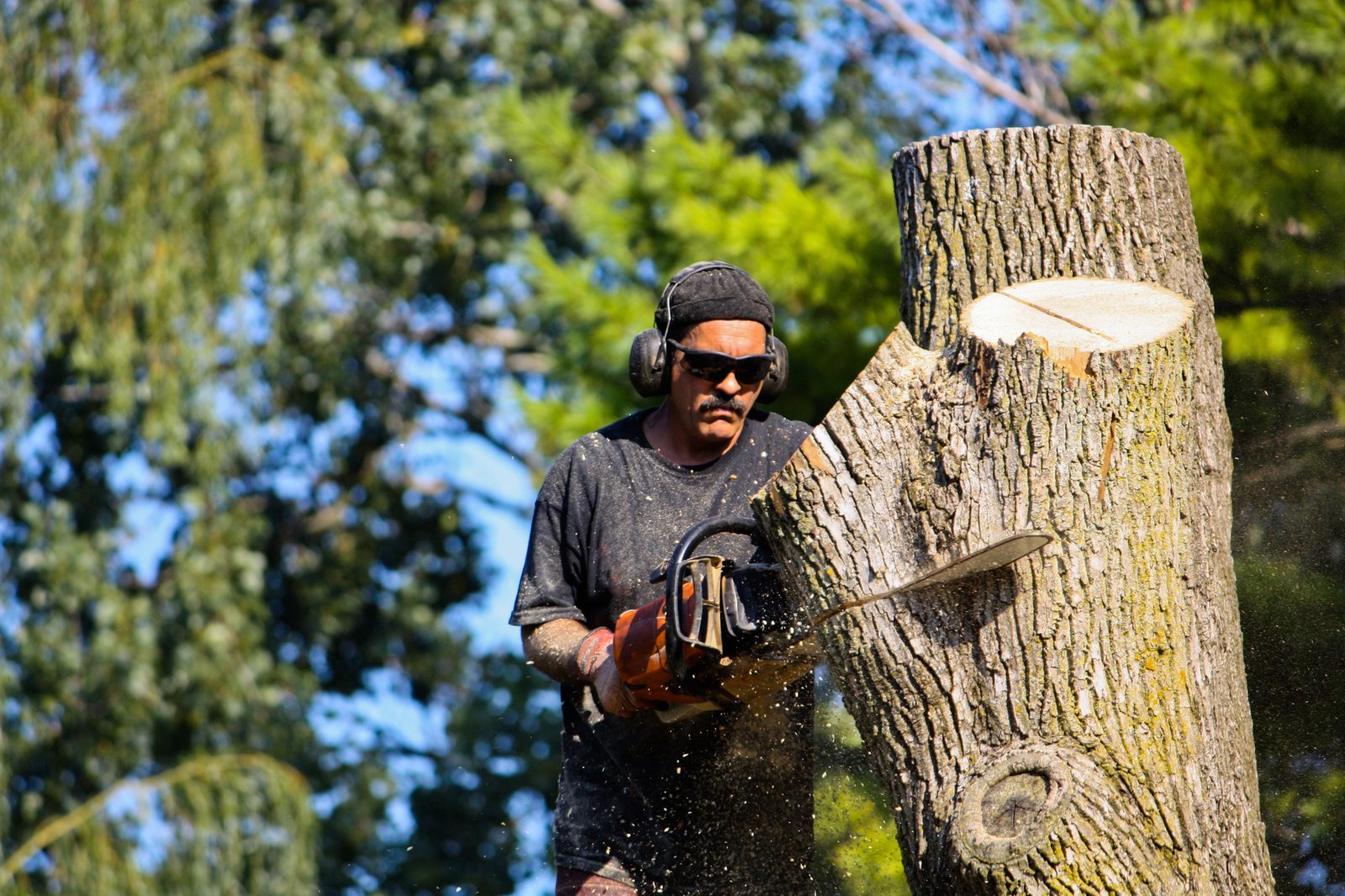
From dead ash along the alley to oversized maples crowding century-old brick homes, we connect city owners with independent tree services that remove trees in sections where gangways, garages and service lines leave little room.
Tree Trimming & Pruning
Big oaks and maples shade most city blocks, and we connect owners with independent tree services that prune deadwood, lift limbs off brick roofs and clear branches from the alley side without topping the tree.
Stump Grinding
Stumps left from city ash removals and old backyard maples are common here, and we connect owners with independent tree services that grind below grade after 811 marks the lines and limestone is accounted for.
Emergency & Storm Tree Removal
When storms like the May 2025 tornado drop limbs on roofs and across alleys, we connect city owners with independent tree services that remove fallen trees once Ameren has made any downed lines safe.
Lot & Land Clearing
Vacant city lots and rehab properties often hide years of volunteer trees and brush, and we connect buyers and owners with independent crews that clear growth while keeping the healthy shade trees you want.
Tree Health & Arborist Care
With emerald ash borer confirmed in the city and many mature oaks and maples reaching old age, we connect owners with independent tree services that assess decline and explain treatment, pruning or removal options.
Homes and lots
Old Brick Houses, Narrow Lots and Tall Trees
The City of St. Louis covers about 66 square miles and is divided into 79 official neighborhoods. Census Bureau figures for 2020 to 2024 count 144,891 households, and about 45 percent of homes are owner occupied, which means a large share of city properties are rentals. The median value of an owner-occupied home in that same survey is $197,500.
For a tree crew, the city's housing pattern shapes almost every job. Many blocks have narrow lots with a house close to each side line, a detached garage at the back and an alley behind that. A big oak or maple in a backyard often can only be reached through a gangway or from the alley, which means the wood has to come out in small pieces or be lifted over the house. Overhead service lines run from the alley poles to many homes, so a crew may be working around wires the whole time.
Vacant lots add another layer. A volunteer tree that grew up on an empty parcel next door can lean over a neighbor's roof within a couple of decades. When you call, it helps to say whether the tree is on your property, on a neighbor's lot, in the strip between the curb and sidewalk, or along the alley, because that changes who is responsible and whether a permit is involved.
Ground and weather
Limestone, Karst and Hard Midwestern Storms
Much of St. Louis sits on karst terrain, where Mississippian-age limestone and dolomite lie under the soil. The local rock even carries the city's name, St. Louis Limestone, and the area once had significant brick clay deposits that were mined inside the city. Karst ground has sinkholes and caves, most of which have been sealed. For tree work, this can mean shallow soil over rock in some yards, roots that spread wide instead of deep, and a stump grinder that hits stone sooner than expected.
The climate is humid subtropical. The average annual temperature at the Lambert airport station is 57.4 degrees, the average July high is about 89.6 degrees, and the city gets about 41.7 inches of precipitation and roughly 16.6 inches of snow in a typical year. St. Louis averages 48 thunderstorm days a year and is counted among the metro areas most often struck by tornadoes in the United States.
Two storms show the risk to trees and homes. On May 27, 1896, a tornado estimated at F4 strength struck downtown St. Louis and killed at least 255 people. On May 16, 2025, an EF3 tornado with peak winds of 152 mph touched down in Clayton, clipped Forest Park and tore through north city neighborhoods including DeBaliviere Place, the Academy area, Fountain Park, Lewis Place and the Greater Ville before crossing the river. About 5,000 structures were damaged and tree damage was widespread along the path.
Summer heat and dry spells stress shallow-rooted trees, and heavy spring rain can soften the ground around a leaning trunk. If a tree has dead wood in the crown, it is usually the first thing to come down in a strong wind, so many owners call in late winter or spring to deal with a problem tree before storm season.
How it works
Getting Connected With a Local Tree Service
Call or send the form
Call (314) 816-2884 or fill in the short form on this page. Tell us the address, what kind of tree it is if you know, roughly how tall it is, and what is wrong with it.
We pass it along
We send your request to an independent tree service that works your part of St. Louis. We do not do the work, and we do not add anything to the price.
The contractor calls back
The tree service asks follow-up questions, may ask for photos, and usually sets a time to look at the tree in person before giving a firm price.
You decide
Compare the quote, ask your questions and choose whether to book. There is no charge for the request and no obligation to hire anyone.
If a tree is touching a power line or has fallen on a house, call Ameren Missouri or 911 first, then call us once everyone is safe.
Pricing
What Moves the Price of Tree Work
No two trees cost the same to take down. Published national guides give a starting point, and the independent tree service that looks at your tree sets the actual price.
Height and trunk size
Angi's tree removal cost guide puts the national average near $750, with most jobs between $200 and $2,000. It lists about $150 to $450 for trees up to 30 feet and $1,000 to $2,000 for trees over 80 feet.
Access and what is underneath
Angi reports that tight, hard-to-reach or unsafe spots can add 25% to 50% to a job. A backyard oak reached only through a gangway, over a garage or above an alley wire falls into that group.
Cranes and rigging
When limbs have to be lowered on ropes or lifted out with a crane, the price climbs. Angi lists crane service at roughly $250 to $600 per day, with very difficult removals reaching about $6,000 to $7,000.
Condition of the tree
Dead and decayed trees are harder to climb safely. Angi lists diseased trees with soft or breakable wood at about $400 to $900, which matters in a city where more than 15,000 public ash trees were mapped as at risk from emerald ash borer.
Stumps and cleanup
Angi lists a first stump at about $100 to $150 and hauling debris away at around $70. Ask whether the quote includes grinding, chipping, hauling and raking, or only felling the tree.
Urgency and permits
Angi notes that urgent removals can reach about $5,000 for large, complex trees, and permits run about $60 to $150 where they are needed. A City Tree Permit has no fee unless a healthy city tree is removed.
These are general published ranges, not our prices. The independent tree service sets and confirms the actual price after seeing the tree.
Warning signs
Signs a Tree Near Your Home Needs a Closer Look
Some problems are easy to spot from the ground. If you see any of these, it is worth having a tree service look before the next storm.
- Bare branches in the upper crown while the rest of the tree leafs out
- Bark falling off an ash tree, or small D-shaped holes in the trunk
- Mushrooms or soft, crumbly wood at the base of the trunk
- A new lean, or soil heaving up on one side of the root zone
- Deep cracks or splits where two large trunks meet
- A broken limb hung up in the canopy
- Branches rubbing on the roof, gutters or the service line to the house
- Woodpecker activity concentrated on one tree
None of these means a tree must come down. A tree service can tell you whether pruning, treatment or removal makes the most sense.
Watch
See Tree Removal in Action
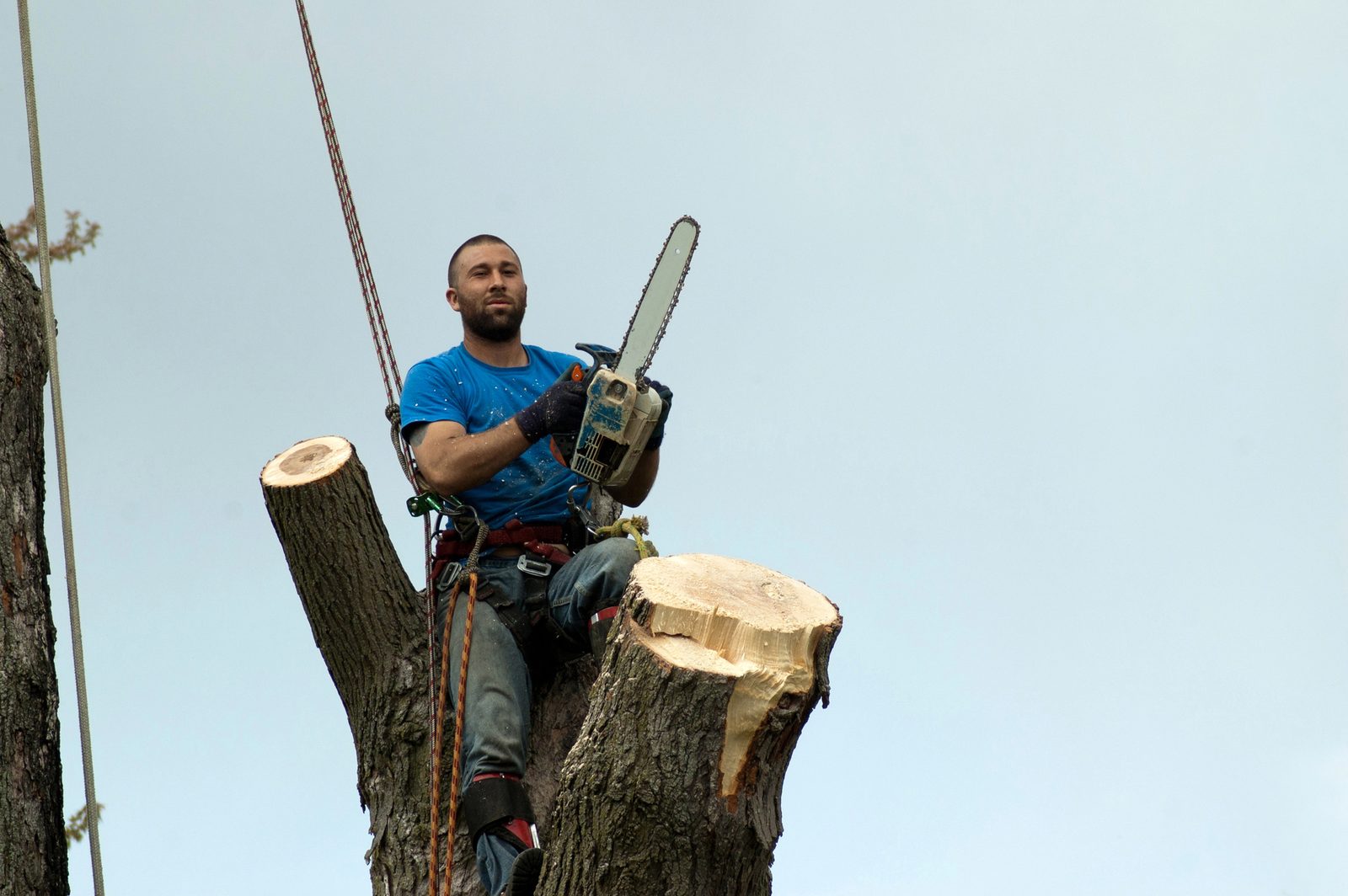
A short look at how a crew takes a large tree down in sections near a house.
Rentals and vacant land
Landlords, Rehabbers and Empty Lots
With owner occupancy at about 45 percent, more than half of occupied homes in the city are rented, and many tree calls come from landlords, property managers and people rehabbing older buildings. A rehab often starts with a tree problem: a mulberry or tree of heaven growing against a foundation, roots in a sewer lateral, or limbs hanging over a roof that is about to be replaced. Clearing that growth early makes the rest of the project easier.
The City's Land Reutilization Authority is one of several city organizations that hold vacant property for sale, and many of those parcels have years of volunteer growth. If you buy a lot or a building, ask the tree service to walk the whole property with you and separate what has to go now from what can wait. Our lot and land clearing page covers that kind of job in more detail.
If you own a rental, keep notes and photos of tree problems and the work you had done. If a dead tree on private property is reported, the City treats a dead or hazardous private ash as a nuisance under Ordinance 68607 and sends the owner a notice to remove it, so dealing with it early is usually cheaper than waiting.

Buyer question
How Much Does Tree Removal Cost in St. Louis?
There is no single price, because the same crew might charge a few hundred dollars for a small ornamental tree in an open front yard and several thousand for a dead oak leaning over a house and an alley wire. National cost guides give a useful frame. Angi's guide puts the average removal around $750 and the common range at $200 to $2,000, with the tallest or most complex trees going well above that.
In the city, the biggest swings usually come from access. A tree that a bucket truck can reach from the street costs less to remove than one that has to be climbed and roped down piece by piece because the only way in is a three-foot gangway. Overhead wires, a garage or fence underneath, and a neighbor's roof nearby all add time and rigging.
The second factor is the condition of the wood. A dead ash becomes brittle, and a crew may not want to climb it at all, which can mean bringing in a lift or crane. Hauling is the third. Some quotes include chipping and hauling everything away, while others leave the logs. Stump grinding is often priced separately, and you can read more on our stump grinding page.
The fair way to compare is to get the scope in writing: which trees, whether the stump is ground, what gets hauled, and when payment is due. Treat any figure on this page as general published context. The independent tree service sets and confirms the real price after it sees the tree.
Rules and permits
City Trees, Permits and Who Checks What
In the City of St. Louis, trees between the curb and the sidewalk, or typically within 10 feet of the curb, are city-owned and managed by the City's Forestry Division. The Division's Tree Section plants, prunes and removes street and park trees. If a city tree in front of your home is dead or damaged, you can report it through the Citizens Service Bureau online or at 314-622-4800.
If you want work done on a city tree yourself, the City requires a Tree Permit to Maintain under Section 12 of Ordinance 68607. That covers pruning, spraying, removal and planting. The permit has no fee unless healthy trees are being removed, in which case the fee helps pay for a replacement. An urban forester usually inspects the site within 5 to 7 business days, and permits expire 60 days after they are issued. Working on a city tree without a permit can lead to fines or fees.
Trees on private property need no City permit for removal or treatment of ash. If your property is in Clayton, Maplewood, University City or another county municipality, that city sets its own rules.
Questions about city trees go to the Forestry Division at (314) 613-7200. Confirming the contractor's license is your responsibility.
Before you hire
Questions to Ask the Tree Service That Calls You
Start with the scope. Ask exactly which trees or limbs will be removed, how the tree will be taken down, and whether the price covers chipping, hauling the wood, raking and grinding the stump. If you want to keep firewood, say so, because leaving logs on site can change the price.
Ask about the equipment and the access route. Will a truck or lift sit in the alley or the street? Will anything have to cross your lawn, patio or a neighbor's yard? If a crane is needed, ask whether the street needs to be blocked and who arranges that.
Ask about utilities. If limbs are near the service line to your house, ask how the crew plans to handle it and whether Ameren Missouri needs to disconnect the line first. If the stump will be ground, ask whether the crew has called 811 to have underground lines marked.
Finally, ask how and when payment is due, and get the agreement in writing. Be cautious with anyone who wants full payment in cash before starting, or who shows up unasked after a storm and pushes for a decision on the spot. A good quote is specific and leaves you time to think.
Ash trees
Emerald Ash Borer in the City of St. Louis
Emerald ash borer is an insect from northeastern Asia that was first found in North America near Canton, Michigan, in 2002. Its larvae tunnel under the bark and cut off the flow of water and nutrients, which effectively girdles the tree. Adults leave small D-shaped exit holes as they emerge. The beetle has been positively identified in the City of St. Louis.
The Forestry Division has mapped more than 15,000 public ash trees along city streets and in parks, about 15,004 of roughly 80,000 street trees. The City's Emerald Ash Borer Strategy, published in 2016, set out a five-year plan to remove and replant many street ash and to treat some larger, healthier ones. The City says untreated ash will be killed and that dead ash becomes brittle and a public safety risk.
On private property, the decision is yours. No City permit is needed to remove or treat an ash on private land, and the City points owners to the Missouri Department of Conservation's homeowner guide on ash borer management. Treatment works only on trees still in fairly good shape, so an ash that already has heavy dieback is usually a removal job. Our tree health page explains the choice in more detail.
Service Area
Neighboring Communities We Connect
Requests come from across the City of St. Louis and from these St. Louis County municipalities along the city line. Each one has its own city hall and its own rules for street trees.
Wellston
Wellston takes its name from Erastus Wells, the St. Louis transit pioneer who bought 66 acres here in 1868, and 27.6 percent of its 773 housing units stood vacant at the 2020 census.
Pine Lawn
Calls for tree removal in Pine Lawn often come from tight lots, since the city packed 2,754 residents into about 0.62 square miles at the 2020 census, one of the denser towns in north county.
Maplewood
Most of Maplewood's historic houses went up between 1900 and 1910 at the end of a streetcar line, so the big trees shading those lots have had more than a century to grow.
Pagedale
Pagedale grew from farmland after a late 1800s streetcar line ran north through the area, incorporated in 1950, and now has 1,384 housing units on about 1.2 square miles of north county.
Clayton
For tree removal in Clayton, the county seat built on 100 acres that farmer Ralph Clayton donated in 1877, start by calling the city's Public Works Operations Division, which handles public forestry.
Richmond Heights
Richmond Heights incorporated on December 29, 1913, with about 500 residents, and today the city owns its street trees, with a Parks Forestry Unit handling pruning and removal in the tree lawn.
Velda City
Velda City covers about 0.16 square miles of north St. Louis County, and its 1,188 residents in 2020 lived at roughly 7,300 people per square mile, so most yard trees grow close to houses.
Northwoods
Northwoods, where Lucas and Hunt Road meets Natural Bridge Road, already counted 733 residents in the 1940 census and grew to 5,831 by 1980, so many of its trees are decades old.
University City
Planning tree removal in University City often starts on its older south side, where the city founded by E.G. Lewis in 1906 keeps 16 places on the National Register of Historic Places.
Hanley Hills
Hanley Hills is a village of about 2,000 people on 0.36 square miles, and its city hall offers request forms for removing dead trees from residents' yards through a grant-funded program.
Shrewsbury
Shrewsbury grew around a Frisco Railroad station dedicated in 1890 and incorporated in 1913, and its garden club has cared for the city's trees and flowers since 1947.
Brentwood
Brentwood began as Maddenville, named for 1870s quarry owner Thomas Madden, and became a village in 1919 to avoid annexation by Maplewood before growing to 12,250 people by 1960.
Tree Removal Questions From St. Louis Owners
Who is responsible for the tree between the curb and the sidewalk?
In the City of St. Louis, trees between the curb and sidewalk, or typically within 10 feet of the curb, are city-owned and managed by the Forestry Division. You can report a problem through the Citizens Service Bureau at 314-622-4800. Any private work on that tree needs a Tree Permit to Maintain.
Do I need a permit to remove a tree in my backyard?
The City says no permit is needed to remove or treat an ash on private property, and its Tree Permit applies to city trees. If you live in a St. Louis County municipality, check with that city hall, because each one sets its own rules. The tree service can also tell you what it has seen locally.
Are you a tree service?
No. We operate this website and connect St. Louis property owners with independent local tree services. The contractor who calls you back gives the quote and does the work.
No. Confirming the contractor's license is your responsibility.
What should I do if a tree falls on a power line?
Stay far away from the tree and the line, and from anything the line touches. Ameren Missouri says not to remove a limb from a power line and to call Ameren to report it, and to call 911 if anyone is in danger. A tree service can deal with the wood once the utility makes the line safe.
How fast can someone come out?
It depends on the contractor's schedule and the time of year. After a large storm, demand is high across the region. When the tree service calls back, tell them if the tree is on a house, blocking a driveway or hanging over a walkway so they can judge the urgency.
Should I remove a dying ash or try to save it?
The City treats only ash that are in good or better condition, with no more than 20% of the canopy showing borer dieback. A private ash past that point is usually a removal. A tree service or arborist can look at the canopy and tell you which side of the line your tree is on.
Talk to a Tree Service Serving St. Louis
Call (314) 816-2884 and we'll pass your request to an independent local tree service who can call you back with a price.
Call (314) 816-2884We operate this website and connect local customers with local tree services. Confirming the contractor's license is your responsibility.
Disclaimer
How This Website Works
Disclaimer: St Louis City Tree Removal operates this website to connect local customers and businesses in St. Louis, MO and nearby communities with independent local tree services. Any price you're quoted comes from the tree service, not from us, and any agreement and the work itself are strictly between you and the tree service you choose. Calls placed through this site may be routed to an available local tree service. See the full disclaimer. Confirming the contractor's license is your responsibility. Same-day and 24/7 emergency services are subject to provider participation, location, technician availability, and demand. Availability is not guaranteed and may vary by market and appointment capacity.