Emergency & Storm Tree Removal · St. Louis, MO
Emergency & Storm Tree Removal in St. Louis, MO
A thunderstorm or tornado can drop a limb through a roof or lay a whole tree across a driveway in seconds. We connect St. Louis owners with independent tree services that handle storm damage.
We operate this website and pass your request to an independent tree service that takes storm calls in your area. The contractor calls you back, asks what fell and where, and gives you a price before starting. You decide whether to hire them, and the request is free.
Call (314) 816-2884St Louis City Tree Removal operates this website and connects local customers with independent local tree services. We don't do the work ourselves and we don't check any tree service's qualifications, so confirming that is up to you before you hire.
Request sent
A local contractor will reach out shortly. Watch for a call from an unknown number.
First steps
What to Do Right After a Tree Falls
Get everyone out of any room where a tree has come through the roof, and stay away from the tree itself until you know where the wires are. If a line is down or a tree is touching one, treat it as live. Ameren Missouri tells customers to stay far away from downed lines and anything they touch, including fences and trees, and to call Ameren to report the location. If anyone is hurt or in danger, call 911.
Do not try to pull a branch off a power line. Ameren says not to remove a tree limb or other object from a line, even with something that seems safe to hold. Utility crews make the line safe first, and then a tree service can deal with the wood.
Once the area is safe, take photos of the damage from several angles before anything is moved. Angi notes that homeowners insurance may cover tree removal when a storm or fallen tree damages the home, so check your policy and call your insurer early. Then call (314) 816-2884 and we will connect you with an independent tree service.
Write down the time the tree fell, the weather and anything you remember about the damage while it is fresh. Keep receipts for any emergency work, such as tarping or temporary repairs, since your insurer may ask for them.
Storm history
St. Louis Storms and the Trees They Leave Behind
St. Louis averages 48 thunderstorm days a year and is counted among the metro areas most often hit by tornadoes in the United States. The most deadly was the tornado of May 27, 1896, estimated at F4, which struck downtown and killed at least 255 people.
On May 16, 2025, an EF3 tornado with peak winds of 152 mph touched down in Clayton, crossed into the city near Forest Park and the Skinker DeBaliviere area, and cut across north city neighborhoods including DeBaliviere Place, the Academy neighborhood, Fountain Park, Lewis Place, Kingsway East, the Greater Ville and O'Fallon. Its path ran about 12.3 miles, about 5,000 structures were damaged, and tree damage was widespread.
Storms like that bring down big, old trees at once, and calls for help far outrun the crews available for days or weeks. Knowing the steps ahead of time, from calling Ameren to photographing damage, makes those days easier.
On site
How Crews Handle a Tree on a House
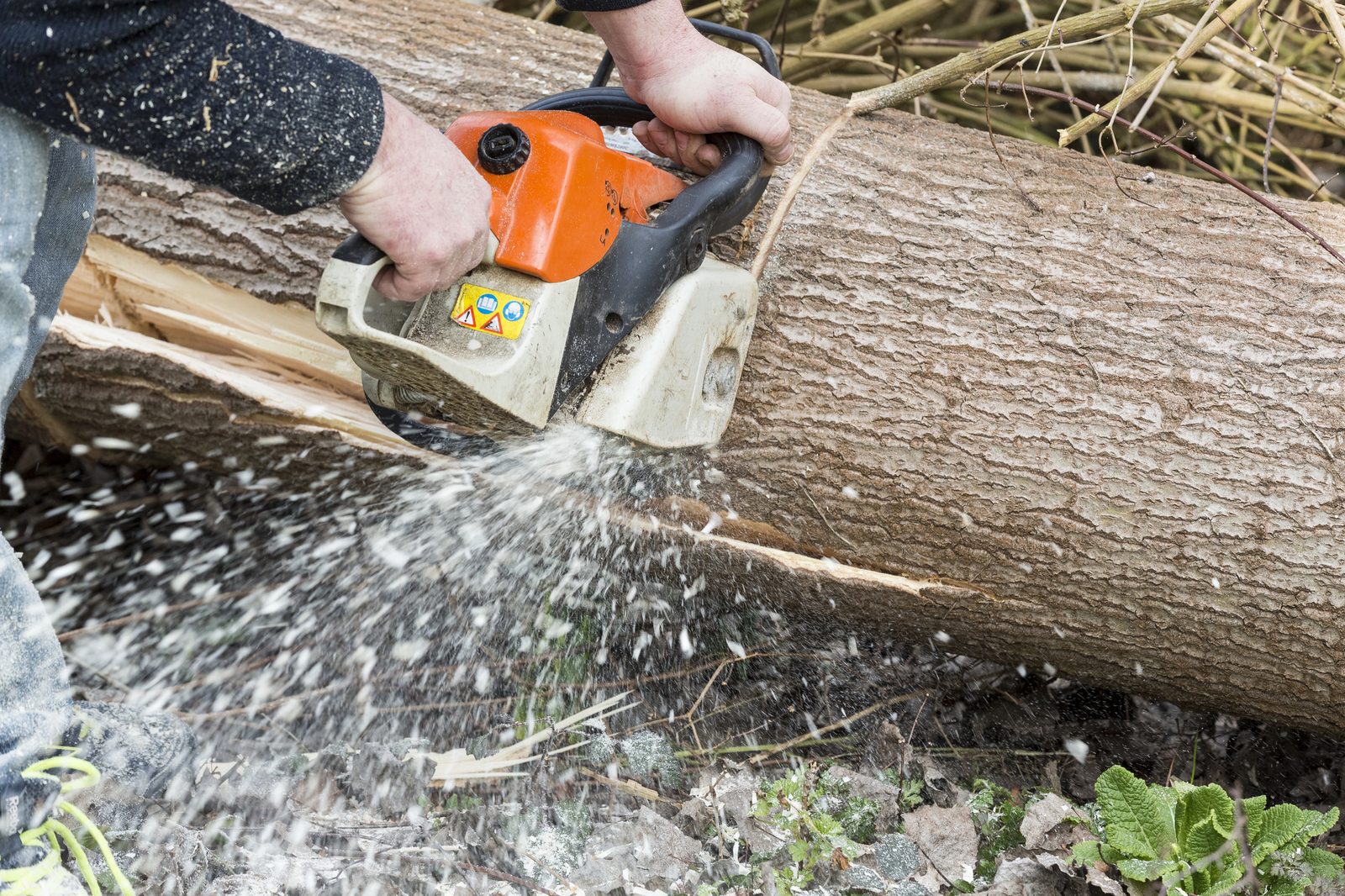
A tree resting on a roof is under tension. Cutting it in the wrong order can drop weight onto the house or make a trunk spring back. Crews usually start by studying how the tree is loaded, then remove the top and limbs in small pieces, often with ropes or a crane, before taking the weight off the structure.
Once the tree is off, the crew can tarp the hole if that is part of the agreement, or you can arrange roofing help separately. Ask what the tree service will and will not do, because some handle only the wood while others coordinate temporary cover.
For a tree across a driveway or yard with nothing underneath it, the work is simpler. Crews cut it into lengths, chip the brush and haul or stack the wood. That is often the kind of job that can wait a day or two when crews are stretched thin.
Watch
Watch Storm Damage Cleanup
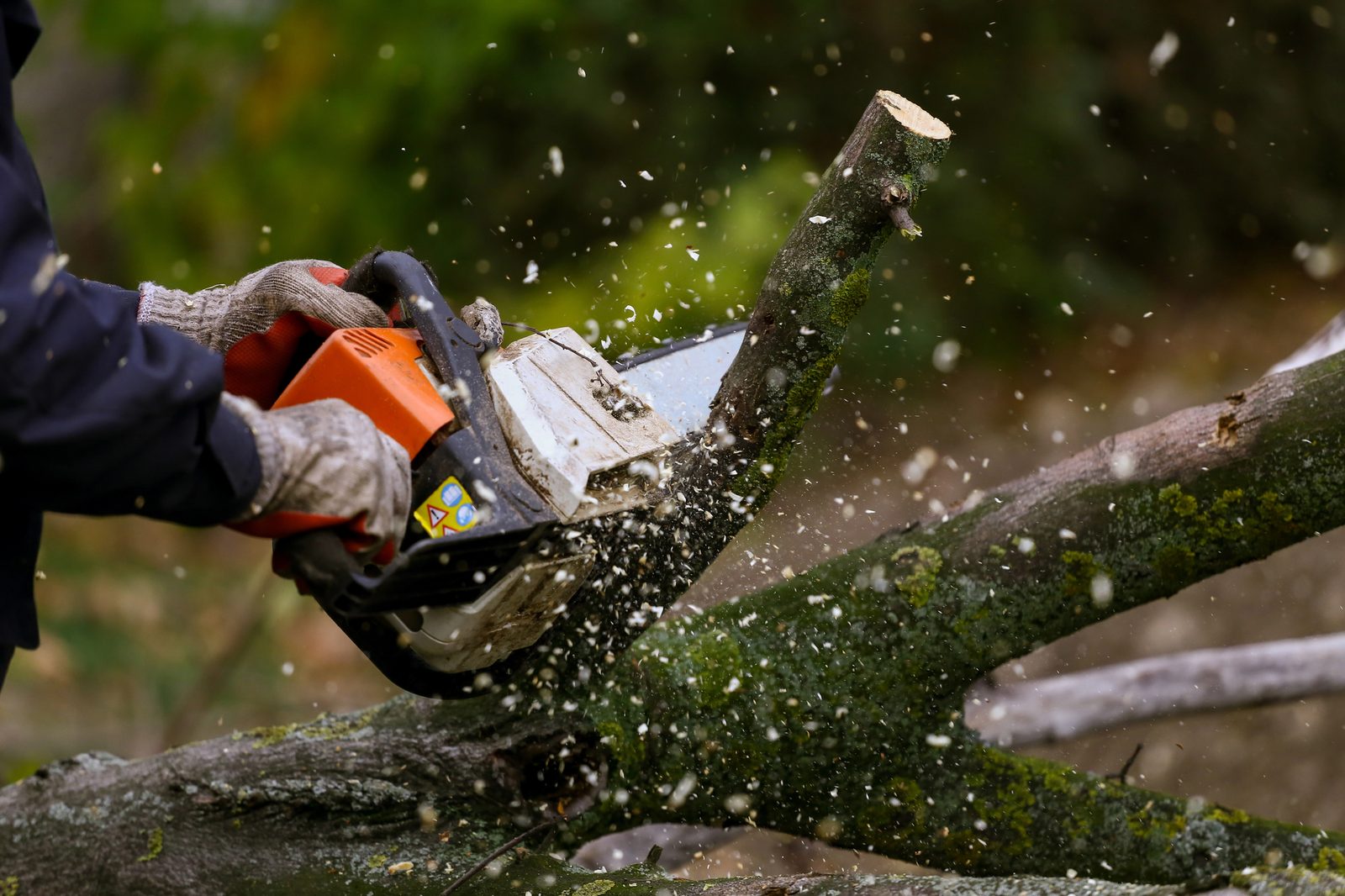
See how a crew works a fallen tree off a structure in stages.
Safety first
Storm Damage Do's and Don'ts
These simple rules come straight from utility safety guidance and common sense around fallen trees.
- Stay far away from any downed line and anything it touches
- Call Ameren Missouri to report a tree on a power line, and 911 if anyone is in danger
- Never pull a limb off a line or try to cut a tree that is touching one
- Photograph damage before anything is moved
- Call your insurance company before agreeing to large repairs
- Get a written price before any work begins
- Do not pay the full amount in cash up front
Hanging limbs caught in the canopy can fall without warning. Keep children and pets out of the area until they are down.
City angle
Fallen City Trees and Blocked Streets
If the tree that fell is a city tree, standing between the curb and the sidewalk or typically within 10 feet of the curb, the City's Forestry Division manages it. Report it through the Citizens Service Bureau online or at 314-622-4800, with the address or intersection, a description and photos if you can safely take them.
After a large storm, city crews work through many reports, so a fallen street tree that is not blocking traffic may wait. If a city tree is resting on your house, tell the Citizens Service Bureau that clearly when you report it.
For trees on private property, the cleanup is the owner's job. That includes trees in backyards, along your side of the alley and limbs that fell from your tree onto a neighbor's property. Talk with your neighbor and your insurer early when a tree crosses a property line.
If a fallen tree blocks the alley behind your home, it can also stop trash pickup and keep you from reaching a rear garage. Mention that when you report a city tree or call a tree service, because it helps them set priorities.
How it works
Getting Help After a Storm
Make it safe
Call Ameren or 911 for any line contact or injury. Keep everyone clear of the fallen tree.
Call us
Call (314) 816-2884 or send the form with the address and what fell where. Photos help.
A tree service calls back
An independent contractor covering your area calls, asks about the damage and gives you a time and price.
Approve the work
Read the written quote, check with your insurer if needed and decide. Our part costs nothing.
After a regional storm, be patient. Every tree service in the area is busy, and safe work takes time.
Pricing
What Storm Work Can Cost
Storm jobs vary even more than planned removals. These published figures from Angi are general context, and the tree service sets the price.
Urgent removals
Angi notes that urgent tree removals can cost as much as $5,000 for large, complicated trees.
Fallen trees on open ground
Angi lists cutting up and hauling an uprooted or fallen tree at about $300 to $500, and some fallen tree jobs as low as $75 to $150.
Cranes and rigging
Angi lists crane service at roughly $250 to $600 per day. Trees resting on houses often need one.
Hard access
Angi reports that tight, unsafe or hard-to-reach spots can add 25% to 50%. A tree wedged between two houses fits that description.
Debris and wood
Angi lists hauling at about $70 and chipping at about $95. Keeping logs for firewood can change the total.
Insurance
Angi says homeowners insurance may cover removal when a fallen tree damages the home. Check your own policy and talk to your insurer.
The independent tree service sets and confirms the actual price for your job.
Use caution
Storm Chasers After a Big Storm
After a major storm, crews from other areas often arrive and go door to door. Some do good work, but others take a deposit and never come back, or do the easy part and leave the rest. The same rule applies to everyone: get a name, a phone number and a written price, and do not pay everything up front.
Watch for pressure tactics such as a price that is only good if you sign right now, or an offer to deal with your insurance company for you. Keep your own contact with the insurer, and read anything you are asked to sign.
We do not check licenses, insurance or credentials, so confirming them is your job before you hire. Ask for proof of insurance and confirm it with the insurer directly, and ask whether the company holds a City of St. Louis business license.
Buyer question
Is a Leaning Tree After a Storm an Emergency?
A tree that suddenly leans after a storm, especially with soil lifted or cracked on one side, may have broken roots. If it leans toward the house, a garage, a sidewalk or a neighbor's home, treat it as urgent and keep people out of the fall zone until someone looks at it.
A tree that has leaned the same way for years and shows no new soil movement is a different story. It may still need attention, but it is usually not an emergency.
When the tree service calls back, describe whether the lean is new, which way it points and what is underneath. Photos of the base help. If the tree needs to come down but is not urgent, our tree removal page explains how planned removals are usually handled.
The same goes for a large limb broken but still hanging in the crown. Crews often call these hangers, and they can fall days after the storm with no warning. Keep people out from under them until they are brought down.
Keep exploring
Related Services and Areas
Tree Removal
From dead ash along the alley to oversized maples crowding century-old brick homes, we connect city owners with independent tree services that remove trees in sections where gangways, garages and service lines leave little room.
Tree Trimming & Pruning
Big oaks and maples shade most city blocks, and we connect owners with independent tree services that prune deadwood, lift limbs off brick roofs and clear branches from the alley side without topping the tree.
Stump Grinding
Stumps left from city ash removals and old backyard maples are common here, and we connect owners with independent tree services that grind below grade after 811 marks the lines and limestone is accounted for.
Hanley Hills
Hanley Hills is a village of about 2,000 people on 0.36 square miles, and its city hall offers request forms for removing dead trees from residents' yards through a grant-funded program.
Shrewsbury
Shrewsbury grew around a Frisco Railroad station dedicated in 1890 and incorporated in 1913, and its garden club has cared for the city's trees and flowers since 1947.
Brentwood
Brentwood began as Maddenville, named for 1870s quarry owner Thomas Madden, and became a village in 1919 to avoid annexation by Maplewood before growing to 12,250 people by 1960.
Storm Tree Removal Questions
Who do I call first if a tree hits a power line?
Ameren Missouri, to report the location, and 911 if anyone is hurt or in danger. Stay far from the line and anything it touches. Call a tree service after the utility makes the line safe.
Will my insurance pay for removal?
Sometimes. Angi notes that homeowners insurance may cover removal when a fallen tree damages the home. Coverage depends on your policy, so call your insurer.
Who handles a fallen tree from the city strip?
Trees between the curb and sidewalk in the City of St. Louis are city trees. Report them through the Citizens Service Bureau at 314-622-4800.
How soon can a crew come?
It depends on the storm and the contractor's schedule. After a widespread storm, a tree on a house is usually handled before a tree lying across an open yard.
Should I start cutting the tree myself?
Not if it is near a line, resting on a building or under tension. Those situations are dangerous even for experienced people with a chainsaw.
Do you charge for emergency requests?
No. We pass your request to an independent tree service at no charge. The contractor quotes the job directly to you.
Talk to a Tree Service Serving St. Louis
Call (314) 816-2884 and we'll pass your request to an independent local tree service who can call you back with a price.
Call (314) 816-2884We operate this website and connect local customers with local tree services. St Louis City Tree Removal doesn't perform tree work, doesn't supervise tree services, and doesn't check any tree service's insurance, licensing, or credentials, so confirm those yourself before hiring.
Disclaimer
How This Website Works
Disclaimer: St Louis City Tree Removal operates this website to connect local customers and businesses in St. Louis, MO and nearby communities with independent local tree services. We are not a tree service, we do not perform, supervise, or warrant any tree work ourselves, and we do not check, verify, or confirm any tree service's license, insurance, bonding, credentials, or qualifications. Confirming those things is the customer's responsibility before hiring. Any price you're quoted comes from the tree service, not from us, and any agreement and the work itself are strictly between you and the tree service you choose. Calls placed through this site may be routed to an available local tree service. See the full disclaimer. Same-day and 24/7 emergency services are subject to provider participation, location, technician availability, and demand. Availability is not guaranteed and may vary by market and appointment capacity.