Tree Health & Arborist Care · St. Louis, MO
Tree Health & Arborist Care in St. Louis, MO
A thinning crown, peeling bark or mushrooms at the base can mean a tree is in trouble. We connect St. Louis owners with independent tree services and arborists who can look at it and explain the options.
We operate this website and pass your request to an independent tree service that offers tree health work in your area. The contractor calls you back, asks what you have noticed, and sets up a visit or gives you a price. You decide what to do next, and there is no charge to ask.
Call (314) 816-2884St Louis City Tree Removal operates this website and connects local customers with independent local tree services. We don't do the work ourselves and we don't check any tree service's qualifications, so confirming that is up to you before you hire.
Request sent
A local contractor will reach out shortly. Watch for a call from an unknown number.
Quick answer
Is My Tree Sick or Just Stressed?
Trees show trouble in a few common ways: leaves that come out small or late, branches that die back from the tips, bark that cracks or falls off, fungus at the base and holes in the trunk. One season of thin leaves after a hot, dry summer can be stress that the tree recovers from. Dieback that gets worse each year usually means something more serious.
Start by noting what you see and when it started. Take photos of the whole tree and of any damaged bark or fungus. If you know the species, write it down, because the likely causes are very different for an ash, an oak and a maple.
Then ask an arborist or tree service to look. They can tell you whether the problem is treatable, whether pruning will help, or whether the tree has become a safety risk. Call (314) 816-2884 and we will pass your request to an independent tree service in your area.
Avoid quick fixes before the cause is known. Heavy fertilizing, piling mulch against the trunk or cutting back large limbs can add stress to a tree that is already struggling. A simple watering schedule during dry spells is usually safe while you wait for an inspection.
Ash trees
Emerald Ash Borer and St. Louis Ash
Emerald ash borer is a beetle native to northeastern Asia that was first found in North America near Canton, Michigan, in 2002. Its larvae feed under the bark and cut off the flow of water and nutrients, effectively girdling the tree. The City of St. Louis says the insect has been positively identified in the city and that it will kill all untreated ash trees in its path.
The City mapped 15,004 ash among roughly 80,000 street trees. Its strategy has been to remove and replant many street ash while treating some larger, healthier ones. For City treatment, an ash must be at least 13 inches in diameter at 4.5 feet above the ground, in good or excellent condition, and show no more than 20% canopy dieback from the borer.
On private land, no City permit is needed to treat or remove an ash. The City points homeowners to the Missouri Department of Conservation's homeowner guide on managing the borer. A tree service can tell you whether your ash still qualifies for treatment or has gone too far.
Older shade trees
Aging Oaks, Maples and Hickories
Most residential parts of St. Louis were planted with large native shade trees, mainly oak, maple and hickory. Many of those trees are now very old, and age brings decay in the trunk and roots, dead limbs in the crown and weaker branch unions.
City conditions add stress. Roots squeezed between a sidewalk, a foundation and an alley have little room. Construction, trenching for utility work and new paving can cut roots. Hot summers, with average July highs near 90 degrees, and dry spells are hard on trees whose roots are already limited.
Arborist care for older trees usually means removing deadwood, reducing weight on long limbs, sometimes installing cables to support weak unions, and checking the base for decay. The goal is to keep a valuable tree safe for longer, and to know when that is no longer possible.
Mulching the root zone, keeping lawn mowers and string trimmers away from the trunk, and watering deeply during long dry spells are simple steps owners can take on their own to help an older tree hold on.
Watch
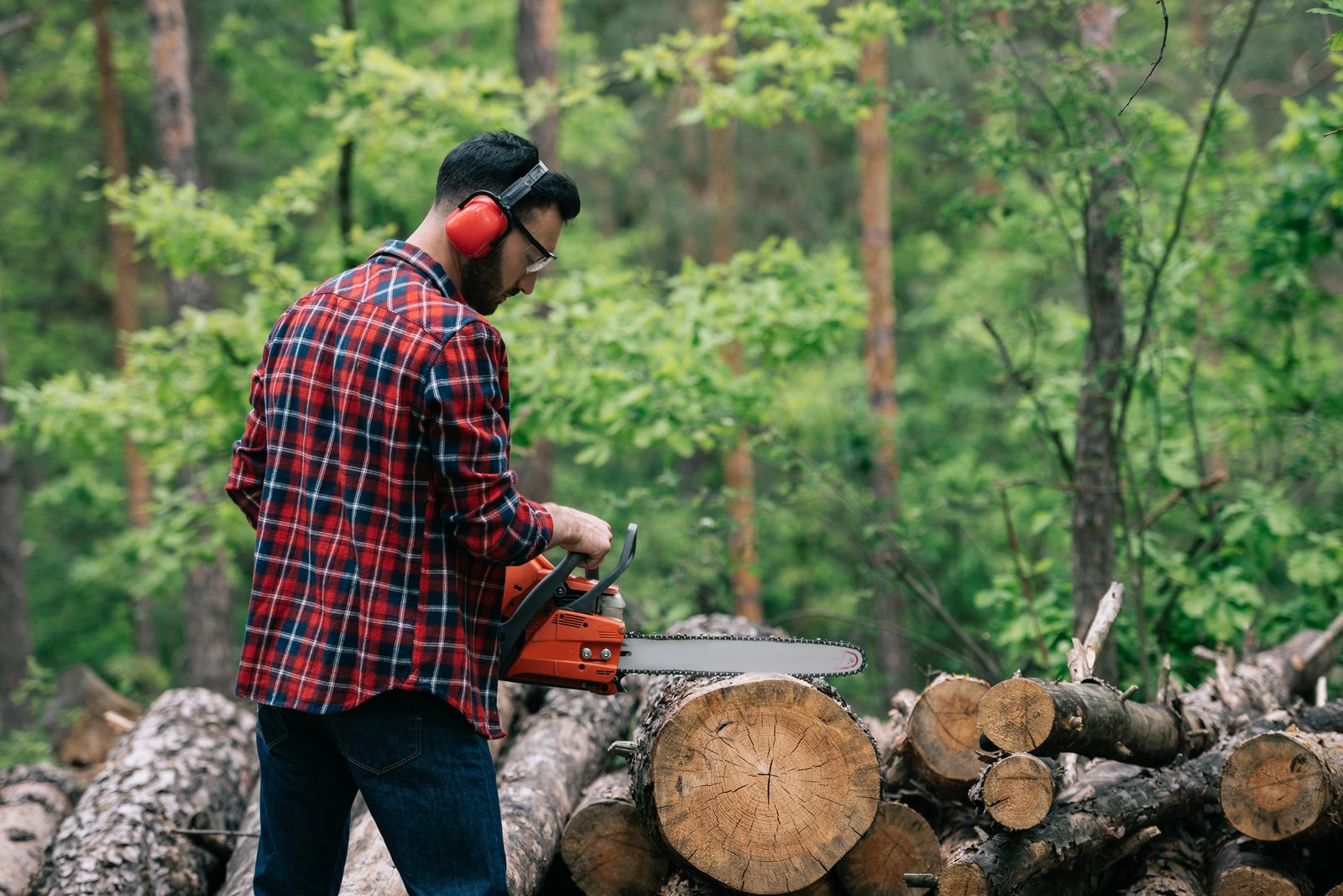
See Arborist Work in Action
Watch how an arborist looks over a tree before recommending work.
Warning signs
Symptoms Worth a Professional Look
If you see any of these, it is a good time to have a tree service or arborist inspect the tree.
- Dieback starting at the top of the crown and moving down
- Bark splitting or falling away from the trunk
- Small D-shaped holes in the bark of an ash
- Heavy sprouting along the trunk of an ash
- Mushrooms or conks growing from the trunk or root flare
- Cavities, soft wood or oozing sap on the trunk
- Leaves turning color or dropping far earlier than nearby trees
- Cracks at the point where two main trunks split
Several of these can have more than one cause, which is why an in-person look is the best next step.
City angle
Treating or Planting a City Street Tree
If you want to treat, prune or plant a tree in the strip between the curb and the sidewalk, the City requires a Tree Permit to Maintain. For ash treatment, the City asks for the chemical name, application rate and method, and Missouri Department of Agriculture license numbers, along with the ISA Certified Arborist number of the person prescribing and performing the work. Treatment permits must be renewed for each future treatment.
There is no permit fee for ash treatment, and the property owner or the contractor can apply. An urban forester typically inspects the site within 5 to 7 business days, and once the work is done the permit holder reports the completion date online.
If you would like a new street tree in front of your home, the Forestry Division takes requests for trees on the City easement. Questions go to the Division at (314) 613-7200, Monday through Friday.
Permits expire 60 days after they are issued, so plan the treatment date before applying. If the work is not reported as complete, the City notes that future applications may be denied.
How it works
Getting Your Tree Looked At
Share what you see
Call (314) 816-2884 or use the form. Describe the tree, the symptoms and how long they have been showing.
We connect you
We pass your request to an independent tree service that offers health assessments in your area.
On-site visit
The contractor inspects the tree, explains what it sees and recommends treatment, pruning or removal.
Choose a plan
You decide what to do. There is no obligation and no fee for the request.
Ask the contractor to explain the reasons behind each recommendation in plain language.
Pricing
What Tree Health Work Can Cost
Tree health work covers many different services. These published national figures give some context, and the tree service sets the actual price.
Arborist reports
Angi's tree removal guide puts the average cost of an arborist report at about $860 where one is required.
Pest treatment
HomeGuide lists pest treatment as an add-on to trimming at about $100 to $500 or more.
Pruning for health
HomeGuide puts average tree trimming around $650 per tree, with most jobs between $400 and $900.
Diseased tree removal
Angi lists removal of diseased trees with soft or breakable wood at about $400 to $900.
Health and species
HomeGuide lists tree health as a price factor, since diseased or weak trees take more care to work on.
Repeat treatments
Ash treatments are not one-time. The City requires a new permit for each future treatment of a city ash, and private treatments also repeat.
These are general published figures. The independent tree service sets and confirms the price for your tree.
Use caution
Be Wary of Quick Diagnoses
Some sellers diagnose a problem in seconds and push an expensive treatment or a removal on the spot. A careful assessment takes a little time: looking at the crown, the trunk, the root flare and the site around the tree.
Ask what the problem is, how sure the contractor is, and what happens if you do nothing for a season. For treatments, ask what product will be used, how it is applied and how often it must be repeated. For pesticide work on a city tree, the City asks for Missouri Department of Agriculture license numbers on the permit.
We do not check licenses, insurance or credentials, so confirming them is your job before hiring. If someone says they are an ISA Certified Arborist, ask for the certification number and look it up through the International Society of Arboriculture.
A second opinion is reasonable for any expensive recommendation. If two independent tree services see the same problem, you can move ahead with more confidence.
Buyer question
Should I Treat My Ash Tree or Remove It?
The City's own rules give a useful guide. It treats only ash in good or better condition, with no more than 20% of the canopy showing borer dieback, and on street trees it looks for trunks at least 13 inches across at 4.5 feet up. An ash past that point is usually a removal candidate.
Treatment is an ongoing cost, since it must be repeated. Removal is a one-time cost, though dead ash become brittle and harder to take down safely the longer they stand. If the tree is valuable to you for shade and is still healthy, treatment can make sense. If it is already declining, removal is often the safer choice.
A tree service can look at your ash and give you prices for both paths. If removal is the answer, our tree removal page explains what to expect.
Whatever you choose, do not move ash firewood. The City notes that the borer spreads mainly when infested firewood is carried from town to town, so burn ash wood close to where it was cut or have it chipped.
Keep exploring
Related Services and Areas
Tree Removal
From dead ash along the alley to oversized maples crowding century-old brick homes, we connect city owners with independent tree services that remove trees in sections where gangways, garages and service lines leave little room.
Tree Trimming & Pruning
Big oaks and maples shade most city blocks, and we connect owners with independent tree services that prune deadwood, lift limbs off brick roofs and clear branches from the alley side without topping the tree.
Stump Grinding
Stumps left from city ash removals and old backyard maples are common here, and we connect owners with independent tree services that grind below grade after 811 marks the lines and limestone is accounted for.
Pagedale
Pagedale grew from farmland after a late 1800s streetcar line ran north through the area, incorporated in 1950, and now has 1,384 housing units on about 1.2 square miles of north county.
Clayton
For tree removal in Clayton, the county seat built on 100 acres that farmer Ralph Clayton donated in 1877, start by calling the city's Public Works Operations Division, which handles public forestry.
Richmond Heights
Richmond Heights incorporated on December 29, 1913, with about 500 residents, and today the city owns its street trees, with a Parks Forestry Unit handling pruning and removal in the tree lawn.
Tree Health Questions
How do I know if my tree is an ash?
Ash have compound leaves with several leaflets and branches that grow in opposite pairs. A tree service or arborist can confirm the species on a visit.
Do I need a permit to treat my own ash?
Not on private property in the City of St. Louis. Treating a city street tree requires a Tree Permit to Maintain.
Can a dying ash be saved?
Usually only if it is still in good condition. The City treats ash with no more than 20% canopy dieback from the borer. Beyond that, removal is the common choice.
What is an ISA Certified Arborist?
It is a credential from the International Society of Arboriculture. It requires at least three years of full-time tree care experience and a passing exam. You can ask for the number and verify it with ISA.
Will the City remove my dead private ash?
No. The City says a dead or hazardous private ash is a nuisance under Ordinance 68607, and the owner will receive a notice to remove it.
Who will look at my tree?
An independent local tree service. We operate this website and connect you; we do not inspect or treat trees ourselves.
Talk to a Tree Service Serving St. Louis
Call (314) 816-2884 and we'll pass your request to an independent local tree service who can call you back with a price.
Call (314) 816-2884We operate this website and connect local customers with local tree services. St Louis City Tree Removal doesn't perform tree work, doesn't supervise tree services, and doesn't check any tree service's insurance, licensing, or credentials, so confirm those yourself before hiring.
Disclaimer
How This Website Works
Disclaimer: St Louis City Tree Removal operates this website to connect local customers and businesses in St. Louis, MO and nearby communities with independent local tree services. We are not a tree service, we do not perform, supervise, or warrant any tree work ourselves, and we do not check, verify, or confirm any tree service's license, insurance, bonding, credentials, or qualifications. Confirming those things is the customer's responsibility before hiring. Any price you're quoted comes from the tree service, not from us, and any agreement and the work itself are strictly between you and the tree service you choose. Calls placed through this site may be routed to an available local tree service. See the full disclaimer. Same-day and 24/7 emergency services are subject to provider participation, location, technician availability, and demand. Availability is not guaranteed and may vary by market and appointment capacity.