Tree Removal · St. Louis, MO
Tree Removal in St. Louis, MO
A dead or leaning tree next to a brick house, a garage or an alley wire is a problem that rarely gets better on its own. We connect St. Louis property owners with independent local tree services that can take it down.
We operate this website and send your request to an independent tree service that works your part of the city or the nearby county municipalities. The contractor calls you back, asks about the tree and the access, and gives you a price. You decide whether to book. Asking is free and there is no commitment.
Call (314) 816-2884St Louis City Tree Removal operates this website and connects local customers with independent local tree services. We don't do the work ourselves and we don't check any tree service's qualifications, so confirming that is up to you before you hire.
Request sent
A local contractor will reach out shortly. Watch for a call from an unknown number.
Quick answer
First Steps When a Tree Has to Come Down
Before you call anyone, figure out where the tree stands. In the City of St. Louis, a tree between the curb and the sidewalk, or typically within 10 feet of the curb, belongs to the City and is handled by the Forestry Division. Report problems with those trees through the Citizens Service Bureau at 314-622-4800. If the tree is on your side of the sidewalk, in your yard or along your side of the alley, removal is usually your decision and your cost.
Next, look up. If any part of the tree touches or hangs over a power line, including the service line that runs from the alley pole to your house, do not try to cut it yourself. Ameren Missouri's safety guidance is plain: never cut or trim trees near electric lines.
Then take a few photos from different sides, note roughly how tall the tree is and how close it is to the house, garage, fence and neighbors, and write down anything you have noticed, such as bark falling off, mushrooms at the base or a new lean. That information lets the tree service give a closer first estimate on the phone.
When you are ready, call (314) 816-2884 or use the form. We pass the request to an independent tree service that covers your area, and that contractor calls you back to set up a look at the tree.
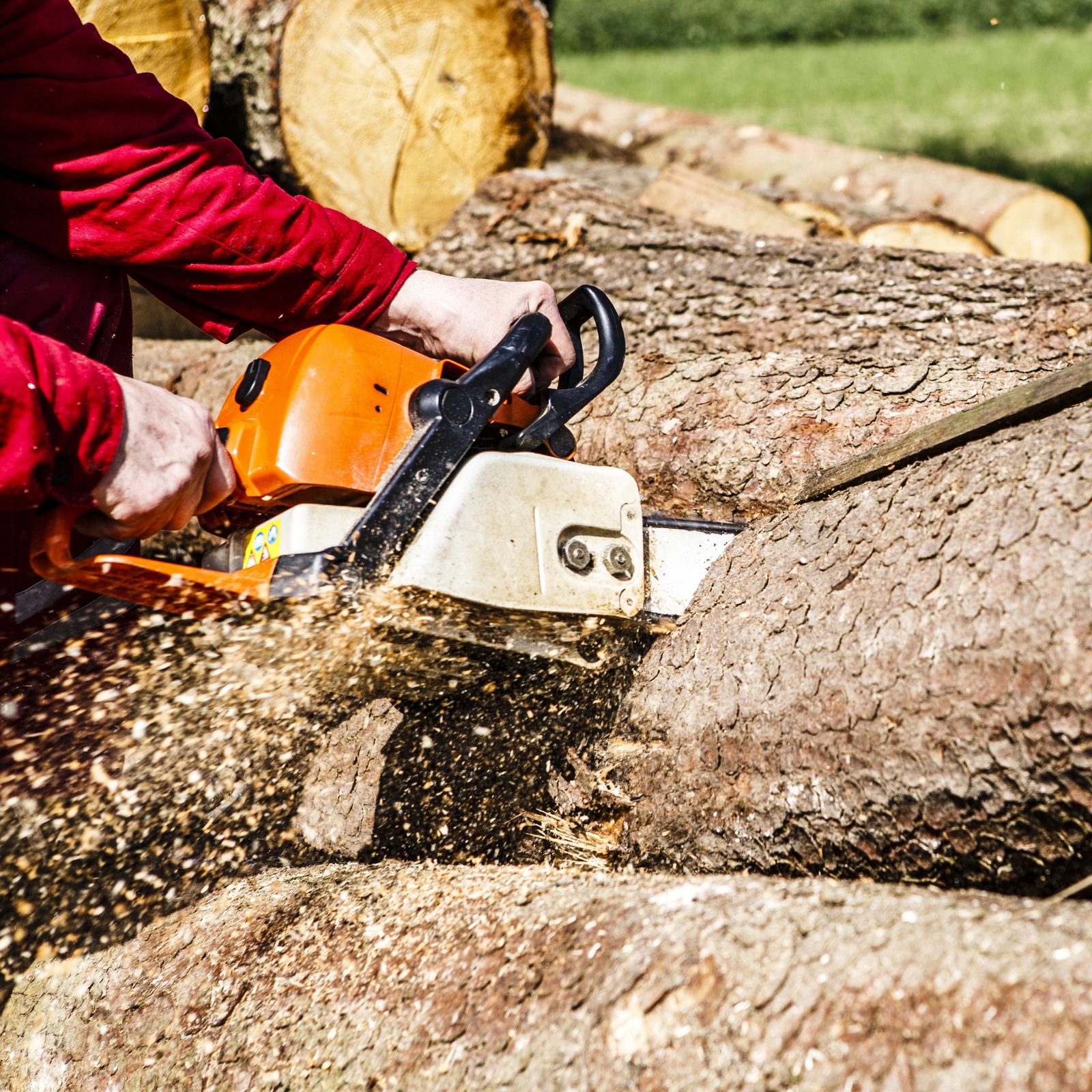
How it is done
Taking a Tree Down in Sections
Very few city trees can be felled in one piece. Lots are narrow, houses sit close together, and most yards have a garage, fence or neighbor's roof within reach of a falling trunk. Crews usually climb or use a lift, cut the limbs back in sections, lower heavy pieces on ropes, and then take the trunk down in short lengths from the top.
This kind of rigging is slower than felling, and it is the main reason a backyard tree in Soulard or the Central West End can cost more than a larger tree on an open suburban lot. When a lift cannot reach the backyard, a climber does the work from inside the tree, and every piece comes out by hand through the gangway or over the back fence to the alley.
On large or dead trees, some contractors bring a crane, which lifts sections over the house to the street. That can shorten a long climbing job, but it needs room to set up and may require the street or alley to be partly blocked for the day.
Common reasons
Why St. Louis Owners Remove Trees
Dead and dying ash are a big share of removal requests in the city. The Forestry Division mapped more than 15,000 public ash trees, and emerald ash borer has been positively identified in the City of St. Louis. Ash on private property face the same insect, and once the canopy thins badly the wood dries out and becomes brittle.
Other removals come from storm damage, decay at the base of old oaks and maples, trees planted too close to a foundation decades ago, and volunteer trees such as mulberry, tree of heaven or silver maple that seeded themselves along fences and alleys. On rehab projects, removing those volunteers is often step one.
Some removals are a choice rather than an emergency: a tree that shades a new garden, drops limbs on a parked car or keeps clogging the gutters. Those are good jobs to schedule in the off season, when crews are less busy and you have time to compare quotes.
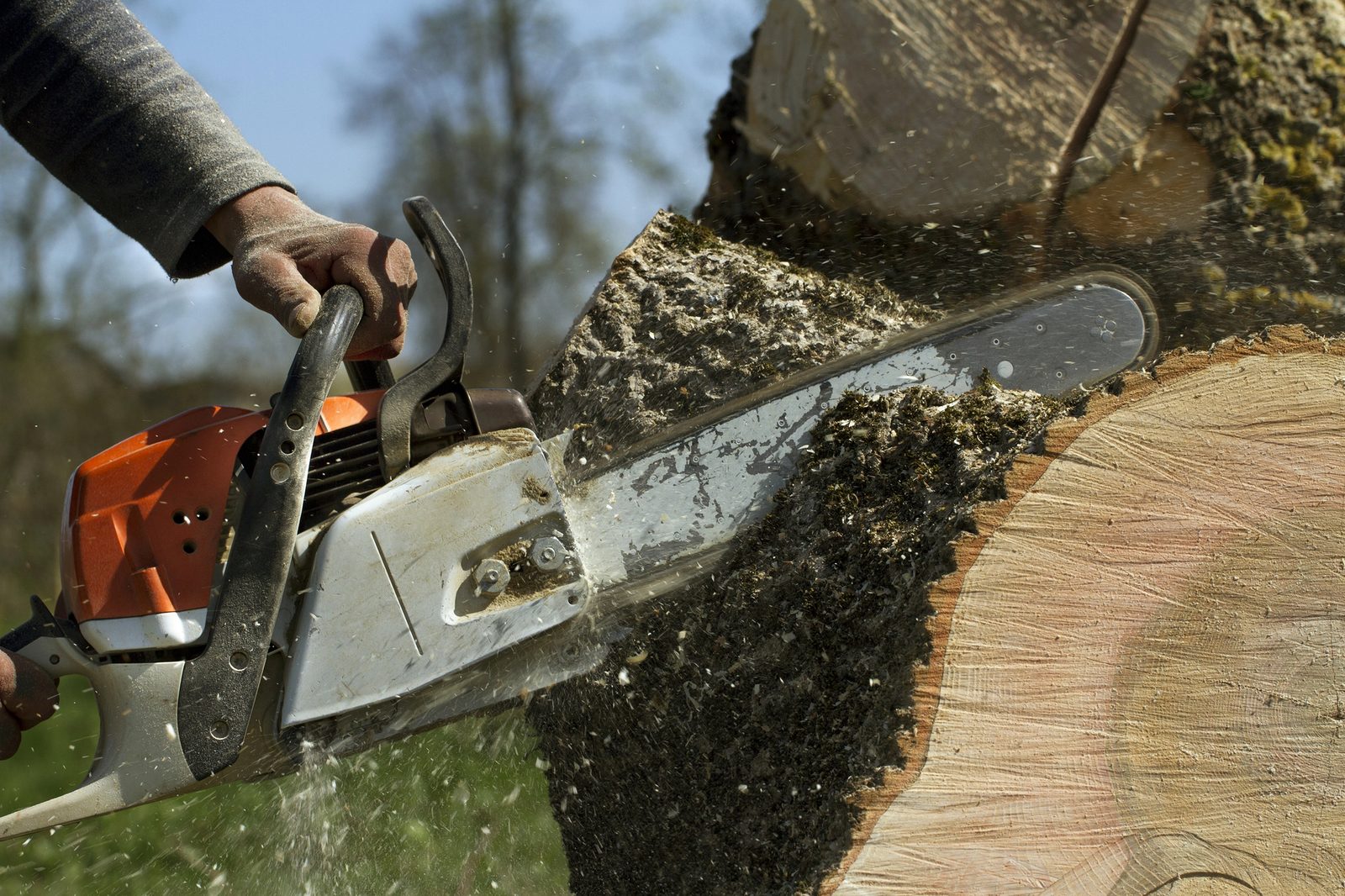
Watch
Watch a Backyard Tree Come Down
Watch a crew lower a large tree in pieces next to a home.
Warning signs
When a Tree Is Likely Past Saving
These signs often point toward removal rather than pruning. A tree service can confirm what it sees once it looks at the tree.
- More than half the crown is bare or leafless in summer
- Large patches of bark peeling away from the trunk
- Fungus growing from the trunk or major roots
- A hollow or cavity that runs deep into the main trunk
- Roots lifting or cracking on one side after a storm
- A major split through the main union of two trunks
- An ash with heavy canopy dieback and woodpecker damage
Some trees with one of these signs can still be pruned or cabled. Ask the tree service to explain why it recommends removal before you agree.
City angle
Alleys, Gangways and Overhead Lines
Many city blocks are laid out with alleys behind the houses, and that is where the utility poles, trash carts and garages are. For tree work, the alley is usually the way in. A truck, lift or chipper can often park there, and wood can be fed straight into the chipper without crossing your yard.
The alley is also where the wires are. Ameren Missouri says it trims trees only in its rights-of-way and easements, and that trees near the service drop, the line from the main line to a home, are the property owner's responsibility. Ameren also says that only qualified line clearance tree contractors may work within 10 feet of higher voltage lines. If your tree is tangled with the service drop, ask the tree service whether the line needs to be disconnected first, which Ameren can arrange.
If the tree stands in the strip between curb and sidewalk, it is a city tree, and private removal needs a Tree Permit to Maintain from the City. Removing a healthy city tree carries a fee that helps pay to replant. If the tree is dead or dying, report it to the City first, since the Forestry Division may handle it.
How it works
From Your Request to a Cleared Yard
Tell us about the tree
Call (314) 816-2884 or send the form with the address, the type of tree if you know it and what worries you about it.
A local contractor calls
An independent tree service that covers your area calls back, asks about access and nearby wires, and books a time to look.
You get a written price
After seeing the tree, the contractor explains how it would take it down and what the price includes, such as hauling and stump grinding.
You choose
Hire them, ask for changes or say no thanks. Our part is free, and nothing is agreed until you accept a quote.
Keep the written quote handy on the day of the work so you can check that everything listed gets done.
Pricing
Published Tree Removal Cost Ranges
These figures come from Angi's national tree removal cost guide. They are a starting point only, and the tree service sets the actual price.
Typical range
Angi puts the average removal near $750 and most jobs between $200 and $2,000, with very large or complicated trees reaching $10,000.
By height
Angi lists about $150 to $450 up to 30 feet, $450 to $1,200 for 30 to 60 feet, $800 to $1,500 for 60 to 80 feet, and $1,000 to $2,000 above 80 feet.
Hard access
Angi reports that tight, hard-to-reach or unsafe locations can add 25% to 50%. A backyard tree reached only by a narrow gangway is a common example in the city.
Crane work
Angi lists crane service at about $250 to $600 per day, and difficult removals that need one can reach roughly $6,000 to $7,000 in total.
Dead and diseased wood
Angi lists diseased trees with soft or breakable wood at about $400 to $900. Dead ash can be harder to climb safely, which may change how the crew approaches it.
Stump and debris
Angi lists the first stump at $100 to $150 and debris hauling at about $70. Ask whether those are in the quote or billed separately.
The independent tree service that looks at your tree sets and confirms the real price.
Use caution
Watch Out for Storm Chasers and Cash Deals
After a big storm, people often knock on doors offering to cut up a fallen tree for cash that day. Some are honest, but you have no easy way to know who they are or whether they will finish. Take a name, a phone number and a written quote, and do not pay the full amount before the work starts.
Be careful with anyone who pressures you to decide on the spot, quotes a price far below everyone else, or asks you to sign something that does not list the work. A deposit for a large job can be normal, but the agreement should say exactly what is being removed, what is hauled and when the balance is due.
We do not check licenses, insurance or credentials, so confirming them is your job. Ask for proof of insurance and call the insurer to confirm it, ask whether the company holds a City of St. Louis business license, and if an ISA Certified Arborist is named, look up the certification through the International Society of Arboriculture.
Buyer question
Can I Remove a Tree on My Property Without a Permit?
For most private trees in the City of St. Louis, the City's permit rules focus on city trees, meaning the ones between the curb and the sidewalk or within about 10 feet of the curb. The City says no permit is needed to remove or treat an ash on private property. Any work on a city tree, though, needs a Tree Permit to Maintain under Ordinance 68607.
If you live in a St. Louis County municipality such as Clayton, Maplewood or Brentwood, the answer depends on that city. Each one has its own code, and some have their own street tree rules. Call the city hall or check its website before work begins.
Historic districts and planned developments can add their own requirements too. When the independent tree service calls you back, ask what it has run into on your block. Then confirm with the city yourself, because the permit responsibility usually sits with the property owner.
Keep exploring
Related Services and Areas
Tree Trimming & Pruning
Big oaks and maples shade most city blocks, and we connect owners with independent tree services that prune deadwood, lift limbs off brick roofs and clear branches from the alley side without topping the tree.
Stump Grinding
Stumps left from city ash removals and old backyard maples are common here, and we connect owners with independent tree services that grind below grade after 811 marks the lines and limestone is accounted for.
Emergency & Storm Tree Removal
When storms like the May 2025 tornado drop limbs on roofs and across alleys, we connect city owners with independent tree services that remove fallen trees once Ameren has made any downed lines safe.
Wellston
Wellston takes its name from Erastus Wells, the St. Louis transit pioneer who bought 66 acres here in 1868, and 27.6 percent of its 773 housing units stood vacant at the 2020 census.
Pine Lawn
Calls for tree removal in Pine Lawn often come from tight lots, since the city packed 2,754 residents into about 0.62 square miles at the 2020 census, one of the denser towns in north county.
Maplewood
Most of Maplewood's historic houses went up between 1900 and 1910 at the end of a streetcar line, so the big trees shading those lots have had more than a century to grow.
Tree Removal Questions
How long does a tree removal take?
A small tree in an open yard can take an hour or two. A large backyard tree that has to be climbed and roped down in sections can take most of a day or more. The contractor can give a time estimate once it sees the tree.
Does the price include the stump?
Not always. Many tree services price stump grinding as a separate line. Ask whether the quote includes grinding, how deep, and whether the chips are hauled or left. Our stump grinding page has more.
Who removes a dead tree between the curb and sidewalk?
That tree belongs to the City of St. Louis. Report it through the Citizens Service Bureau at 314-622-4800. Private work on it requires a Tree Permit to Maintain.
What if my neighbor's tree is hanging over my house?
Talk to your neighbor first, because the tree is on their property. If it is dead and dangerous, the City may treat it as a nuisance. A tree service can tell you what work is possible from your side.
Can a tree be removed near the power line to my house?
Yes, but not by you. Ameren Missouri says trees near the service drop are the owner's responsibility and that it can disconnect the line so trimming can be done safely. Ask the tree service how it will handle the line.
Is there a fee for using this website?
No. We pass your request to an independent tree service at no charge. You pay the contractor only if you hire them.
Talk to a Tree Service Serving St. Louis
Call (314) 816-2884 and we'll pass your request to an independent local tree service who can call you back with a price.
Call (314) 816-2884We operate this website and connect local customers with local tree services. St Louis City Tree Removal doesn't perform tree work, doesn't supervise tree services, and doesn't check any tree service's insurance, licensing, or credentials, so confirm those yourself before hiring.
Disclaimer
How This Website Works
Disclaimer: St Louis City Tree Removal operates this website to connect local customers and businesses in St. Louis, MO and nearby communities with independent local tree services. We are not a tree service, we do not perform, supervise, or warrant any tree work ourselves, and we do not check, verify, or confirm any tree service's license, insurance, bonding, credentials, or qualifications. Confirming those things is the customer's responsibility before hiring. Any price you're quoted comes from the tree service, not from us, and any agreement and the work itself are strictly between you and the tree service you choose. Calls placed through this site may be routed to an available local tree service. See the full disclaimer. Same-day and 24/7 emergency services are subject to provider participation, location, technician availability, and demand. Availability is not guaranteed and may vary by market and appointment capacity.